 Play 2026 Book Bingo
Native American Novels and Non-Fiction Book Recommendations
 By: Angela & Melissa
Updated:
As an Amazon Associate and member of other affiliate programs, we may earn a referral fee from qualifying purchases.
By: Angela & Melissa
Updated:
As an Amazon Associate and member of other affiliate programs, we may earn a referral fee from qualifying purchases.The books on this list explore the Native American experience across both history and the present day, including both novels and non-fiction. You’ll find stories set on reservations and in cities, both historical and contemporary, told through mystery, memoir, literary fiction, and more. Together they offer a window into the resilience, everyday lives, hardships, and joys of many different Native nations and peoples.
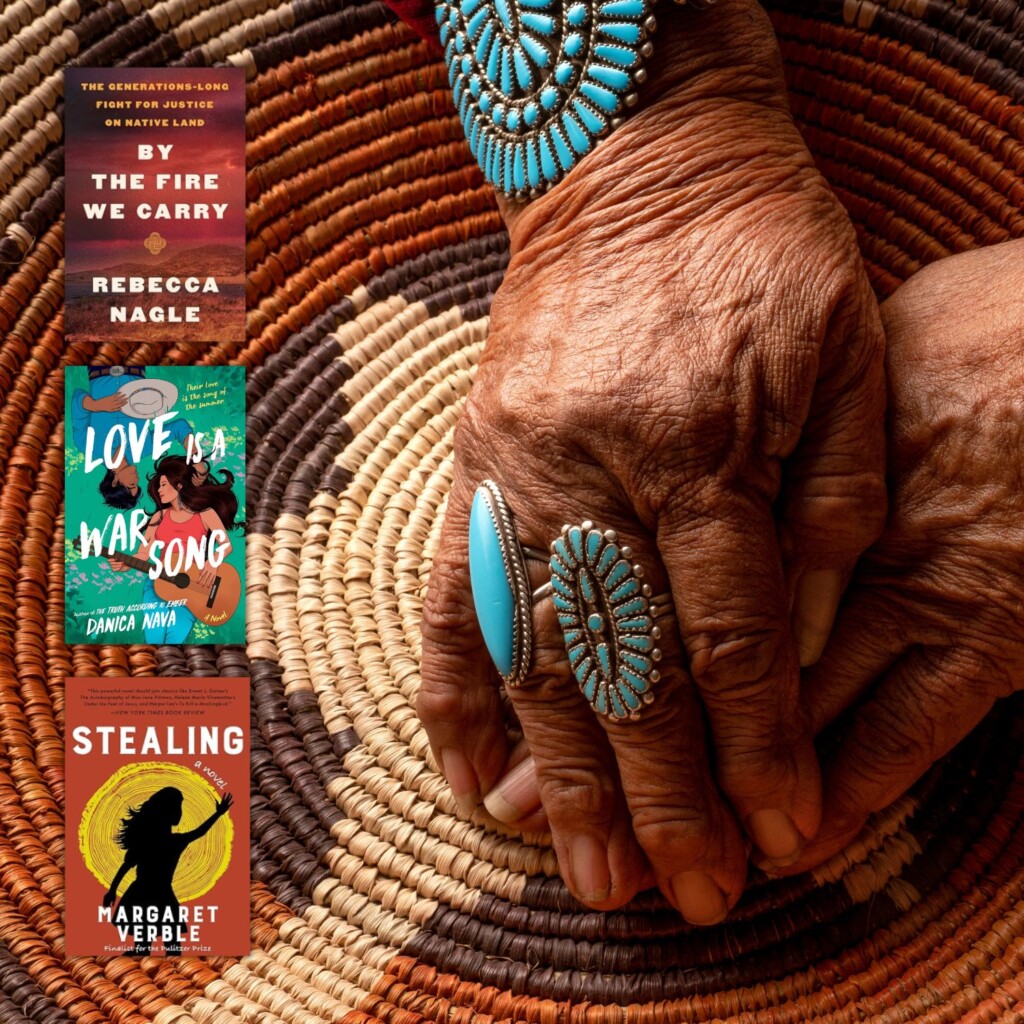
In selecting the fiction titles, we focused on books by Native American authors who share heritage with the characters and communities they write about. While our list is a good way to begin learning about experiences different from our own, it’s far from comprehensive. There are many more Nations, time periods, and voices to explore. Feel free to add additional recommendations in the comments below the post so other readers can see them.
Novels with Native American Characters
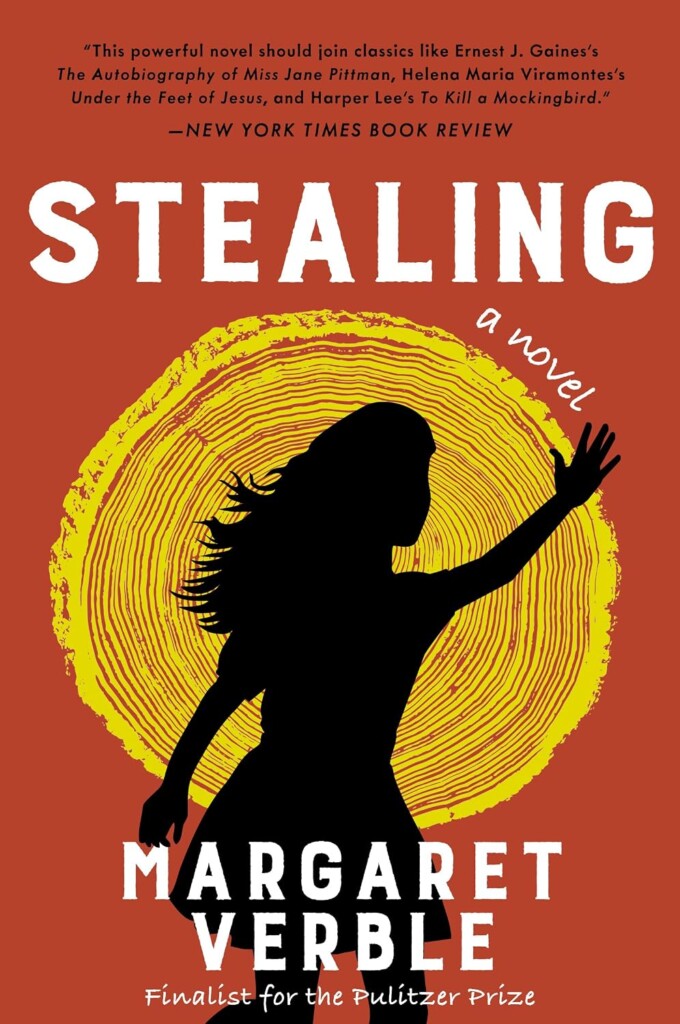
Book Summary
Kit spends her days far out in the country tending the garden, fishing in a local stream, and reading Nancy Drew stories from the library bookmobile. After her Cherokee mother’s death, her white father has been grief-stricken, leaving her lonely until a mysterious and beautiful woman moves in down the road. She and Bella become fast friends.
But danger lurks, and Kit is ripped from her home and Cherokee family and sent to Ashley Lordard, a religious boarding school. She and the other Native students are stripped of their heritage, force-fed Christian indoctrination, and sexually abused.
Despite the horrors of her new life, Kit remains strong-willed and shrewd, keeping a journal of her experiences and slowly piecing together how she ended up at the school.
HEADS UP: This story is told from Kit’s perspective, including her POV of the sexual abuse she endures.
About the Author
Margaret Verble is an enrolled citizen of the Cherokee Nation and comes from a large Cherokee family. Her debut novel, Maud’s Line, was a finalist for the 2016 Pulitzer Prize for Fiction, and she has since drawn widely on Cherokee history and her own family’s experience and their Cherokee allotment land near Fort Gibson, Oklahoma.
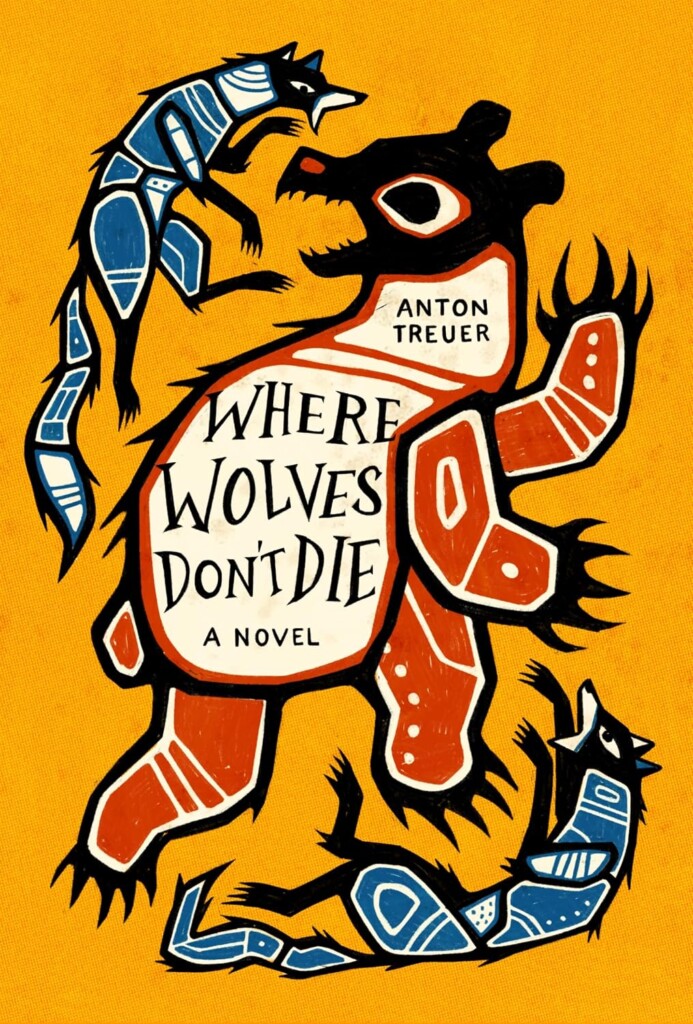
Where Wolves Don’t Die
Book Summary
Ezra’s father is a professor of Ojibwe in Northeast Minneapolis, but Ezra hates being in the city with the dirty snow. He would rather be back at his home, the Nigigoonsiminikaaning First Nation reservation. Things get even worse when he gets into a fight with his bully, Matt, who has been terrorizing Ezra and his friend Nora.
The night of the fight, Matt’s house catches fire and Ezra becomes the prime suspect. His family knows “justice” won’t be just, so they send Ezra to run traplines with his grandfather in a remote part of Canada. But Matt’s family continues searching for him.
About the Author
Anton Treuer is Ojibwe, enrolled at Leech Lake, and a Professor of Ojibwe at Bemidji State University. He is fluent in the language and serves as a ceremonial officiant. While this is his first novel, in 2023 he published a non-fiction work titled Everything You Wanted to Know About Indians But Were Afraid to Ask.
The author narrates the audiobook, and readers praise his beautiful voice.
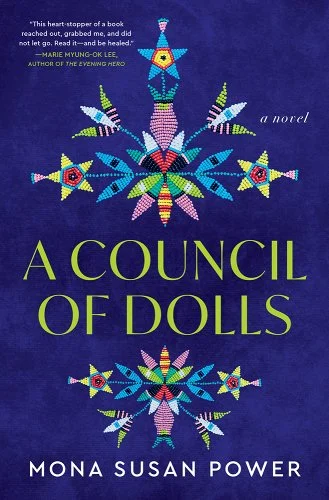
A Council of Dolls
Book Summary
A Council of Dolls follows three generations of Yanktonai Dakota girls, each accompanied by a beloved doll that becomes far more than a toy.
Born in 1961 Chicago, Sissy has a volatile relationship with her mother. However, there is also beauty in her life, including her new doll, Ethel, who whispers kindness into Sissy’s ear and even protects her.
Lillian, born in 1925, and her sister Blanche are forced to attend an “Indian School” away from their family. Lillian’s doll, Mae, finds a way to defend the girls after a tragedy.
Cora was born in 1888 in the legacy of the “Indian Wars.” White men move her across the country so she can be civilized, but they are brutal and burn her beloved buckskin and beaded doll, Winona. However, the spirit of Winona may not have perished in the fire.
What to Expect in This Book
This book starts with Sissy and then moves backward through generations, with each woman’s childhood feeling like a different story. Then, you’ll circle back to Sissy as an adult for the final segment as she gathers her family history to tie it together.
Despite being devastating and hard to read at points, the publisher says it’s ultimately hopeful.
About the Author
Mona Susan Power is an enrolled member of the Standing Rock Sioux Tribe (Yanktonai Dakota), born and raised in Chicago and now living in Minnesota. Her acclaimed debut, The Grass Dancer, won the PEN/Hemingway Award, and her writing draws deeply on her own family’s history — her mother grew up on the Standing Rock Reservation, and both maternal grandparents attended the Carlisle Indian Industrial School.
Don’t miss the author’s note, where she ties the book to her family history and shares more about the real people who inspired her story.
Book Girls’ Readers Rate This Book
100% Would Recommend to a Friend
Book Summary
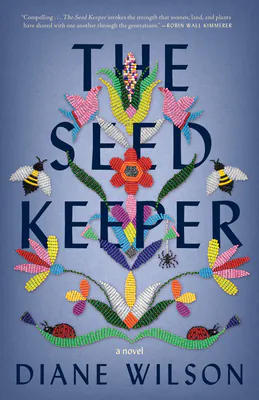
Long before spring meant placing orders for seeds through gardening catalogs, the Dakhótas relied on their strong seed-saving traditions for survival. While this book will teach you about that seed-saving heritage, it also covers so much more.
Rosalie Iron Wing grew up learning about plants and her ancestry as a Dakhóta from her father. However, when he goes missing, she is sent to live with a foster family. Decades later, Rosalie is now both a mother and the widow of a farmer. She still takes solace in their land, although it has been threatened by both nature and man.
When Rosalie returns to her birthplace to learn more about her family history, she learns about the trauma of boarding schools, the war between the Dakhótas and the government, and the cache of seeds that survived through generations.
About the Author
Diane Wilson is a Dakota writer and is an enrolled member of the Rosebud Reservation. She uses personal experience to illustrate a broader social and historical context. A longtime advocate for Indigenous food sovereignty, she has led Dream of Wild Health and the Native American Food Sovereignty Alliance. Based in Minnesota, Wilson’s work braids family history, land, and seeds with contemporary Native life today.
Where They Last Saw Her
Book Summary
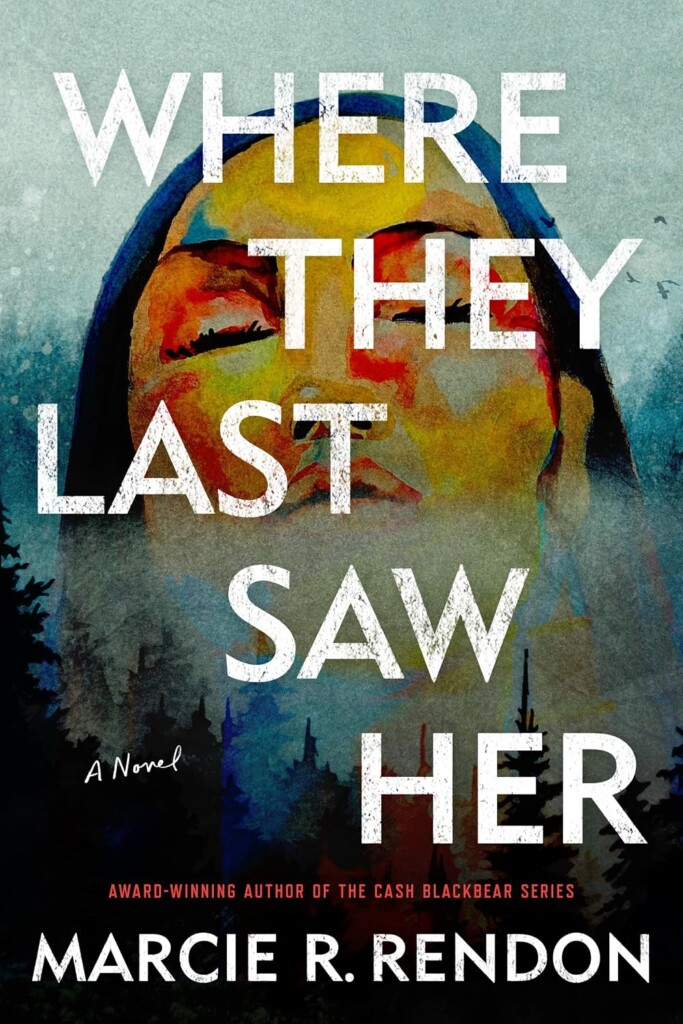
Quill has always lived on the Red Pine reservation in Minnesota, and she has always known the high risk of disappearance for women who look like her. One morning, while she is running in the woods to train for the Boston Marathon, she hears a scream. When she investigates, she finds tire tracks and a lone, beaded earring.
She’s determined to do something, starting her investigation with the group of men working on the pipeline construction just north of their homes. But as she gets closer to the truth, someone else disappears. As Quill puts herself, her family, and everything she’s built on the line to make a difference, the novel asks searing questions about bystander culture, the reverberations of even one act of crime, and the long-lasting trauma of being invisible.
About the Author
Marcie R. Rendon is an enrolled member of the White Earth Nation (Ojibwe/Anishinaabe), an author, playwright, and community arts activist. This novel is set on the White Earth Reservation, and brings an insider’s eye to the crisis of Missing and Murdered Indigenous Women.
Calling for a Blanket Dance
Book Summary
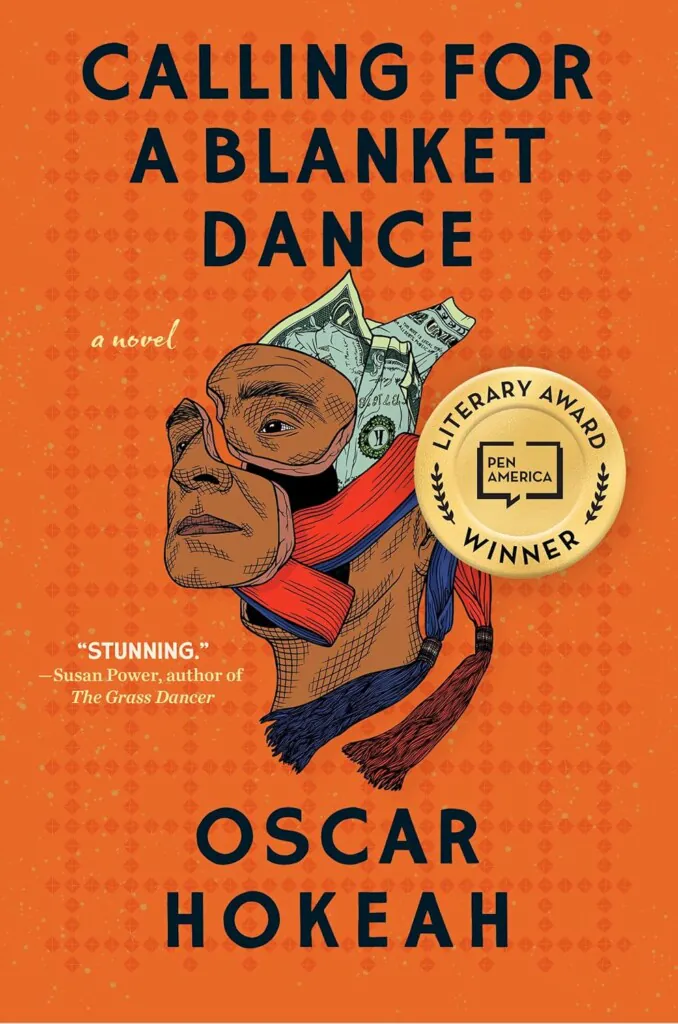
This book is a cross between a novel and intertwined short stories, with 11 family members narrating one chapter each to tell the story of a man named Ever. The stories cover around 35 years of Ever’s life, starting at birth. They seek to determine if a tragic event in his past left him cursed. In the final chapter, you’ll hear from Ever himself.
Ever is of Cherokee, Kiowa, and Mexican descent, mirroring the author’s heritage. As you read, you’ll learn about Cherokee and Kiowa traditions, such as stomp dances, the blanket dance, and powwows.
Consider This Before Reading
The 2023 PEN/Hemingway Prize-winning book is filled with difficult topics, including generational trauma, sexual abuse, drugs, alcohol, and poverty. Readers say you’ll also be rewarded with joy, love, hope, and even laughter.
The beginning of this book includes a family tree that may help you understand the relationships between the characters.
About the Author
Oscar Hokeah is a citizen of the Cherokee Nation and the Kiowa Tribe of Oklahoma, with Mexican heritage through his father, which is reflected in the background of his novel’s protagonist. Calling for a Blanket Dance draws on decades of work with Native youth in Oklahoma.
The Firekeeper’s Daughter
Book Girls’ Readers Rate This Book
98% Would Recommend to a Friend
Book Summary
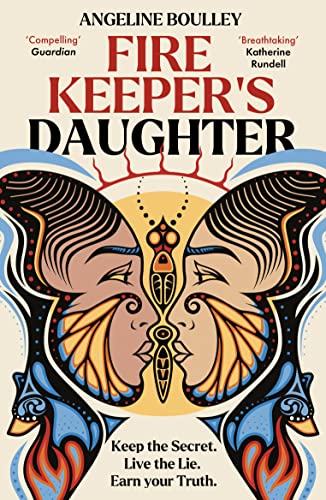
This YA thriller, written by a Native American author, is about a biracial teen who is an unenrolled member of the Ojibwe tribe. Eighteen-year-old Daunis has never quite fit in at home or on the reservation. She dreams of heading to college, but after a tragedy, she must remain home to care for her mom.
Life takes another big turn when she witnesses a murder and then reluctantly goes undercover in the criminal investigation to infiltrate a drug ring in her community.
Reader Thoughts on this Book
Although some feel this book starts slow, it made the list of our reader’s favorite books of 2021! They mentioned that it’s great on audio to hear the beautiful native language woven into the book.
Be aware that this book contains a sexual assault.
About the Author
Angeline Boulley is an enrolled member of the Sault Ste. Marie Tribe of Chippewa Indians and a storyteller who writes about her Ojibwe community in Michigan’s Upper Peninsula. She is a former Director of the Office of Indian Education at the U.S. Department of Education. The title of this book is a nod to her father, a traditional firekeeper.
There are also two additional highly-rated books in the series, titled Warrior Girl Unearthed and Sisters in the Wind.
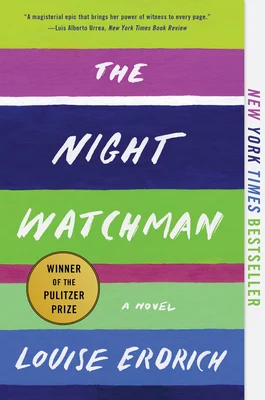
The Night Watchman
Book Girls’ Readers Rate This Book
96% Would Recommend to a Friend
Book Summary
In 1953, a new “emancipation” bill was being considered in the US Congress. However, the Chippewa Council knows that the bill isn’t about freedom; it’s a threat to their rights and land. Thomas is the night watchman at the jewel-bearing plant near the reservation and serves as a Council member.
Valedictorian Patrice also works at the plant, using all her money to support her mother and brother. Her older sister, Vera, left the reservation to live in Minneapolis, but the family hasn’t heard from her in months. Eventually, she travels to Minnesota, trying to track down Vera.
The lives of Thomas and Patrice interact with many other memorable characters on and off the reservation as they encounter the best and worst of human nature.
Critical Acclaim
This novel is based on the real-life of the author’s grandfather and won the 2021 Pulitzer Prize for Fiction as well as the 2025 William Dean Howells Medal.
About the Author
Louise Erdrich is an acclaimed Native American author and an enrolled member of the Anishinaabe Nation. She was born in Little Falls, Minnesota, and she grew up in Wahpeton, North Dakota, where her parents taught at a Bureau of Indian Affairs school. Erdrich owns Birchbark Books, an Indigenous-focused bookstore in Minneapolis.
We also recommend her 2021 novel, The Sentence, which is also set in Minneapolis, Minnesota during the one-year period between All Souls’ Day 2019 to All Souls’ Day 2020.

Book Summary
Avery is a pop star from the Muscogee Nation, but has become a national joke after posing scantily clad on the cover of Rolling Stone in a feather warbonnet. Her intention was to highlight her success in overcoming the odds as a Native American singer, but instead, she’s been dubbed a fake. To escape the spotlight, she returns to her estranged grandmother Lottie’s ranch on the rez in Oklahoma.
Lucas Iron Eyes has worked and lived on Red Fox Ranch since he was 16. His priorities in life are preserving his culture, protecting the horses, and sticking to himself. So, he’s less than happy when he has to pick up Lottie’s granddaughter at the bus station, only to discover that she is the same Avery Fox that has been in the news.
About the Author
Danica Nava is an enrolled citizen of the Chickasaw Nation and a pioneering voice in Native romance. Frustrated by the lack of Indigenous representation in the genre, she writes funny, contemporary love stories centered on Native characters.
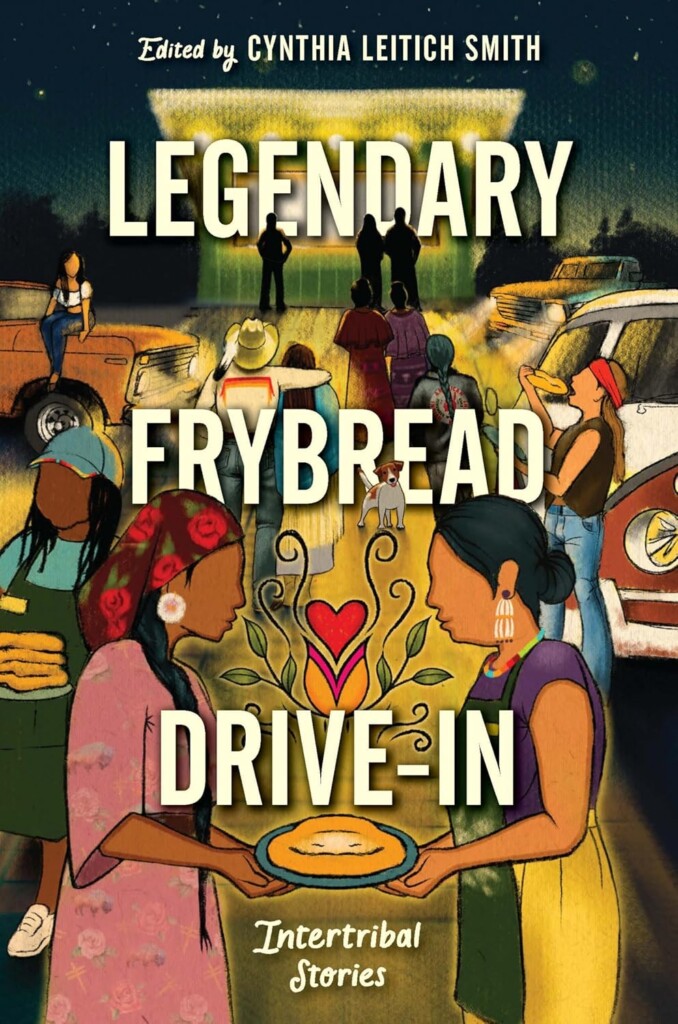
Legendary Frybread Drive-In
Book Summary
This collection of intertribal stories by a variety of talented writers is united by Sandy June’s Legendary Frybread Drive-In. The restaurant’s neon sign beckons to teens of every tribal Nation, often when they need it most. Although the individual stories have different styles and themes, they’re all centered on this magical Drive-In that appears whenever it is needed.
While this is classified as YA and the stories focus on teenagers, adult readers also love them, with many saying they don’t typically enjoy anthologies but couldn’t put this one down. It’s a great option to explore a variety of Native authors.
About the Authors
Legendary Frybread Drive-In is edited by Cynthia Leitich Smith, a citizen of the Muscogee Nation, bestselling author, and author-curator of Heartdrum, a Native-focused imprint at HarperCollins Children’s Books.
Rather than the work of a single author, this collection gathers stories and poems from a wide range of Indigenous writers, both new and established, each bringing the voice and perspective of their own tribal Nation to the page — among them Angeline Boulley, Darcie Little Badger, Eric Gansworth, David A. Robertson, Brian Young, and many more.
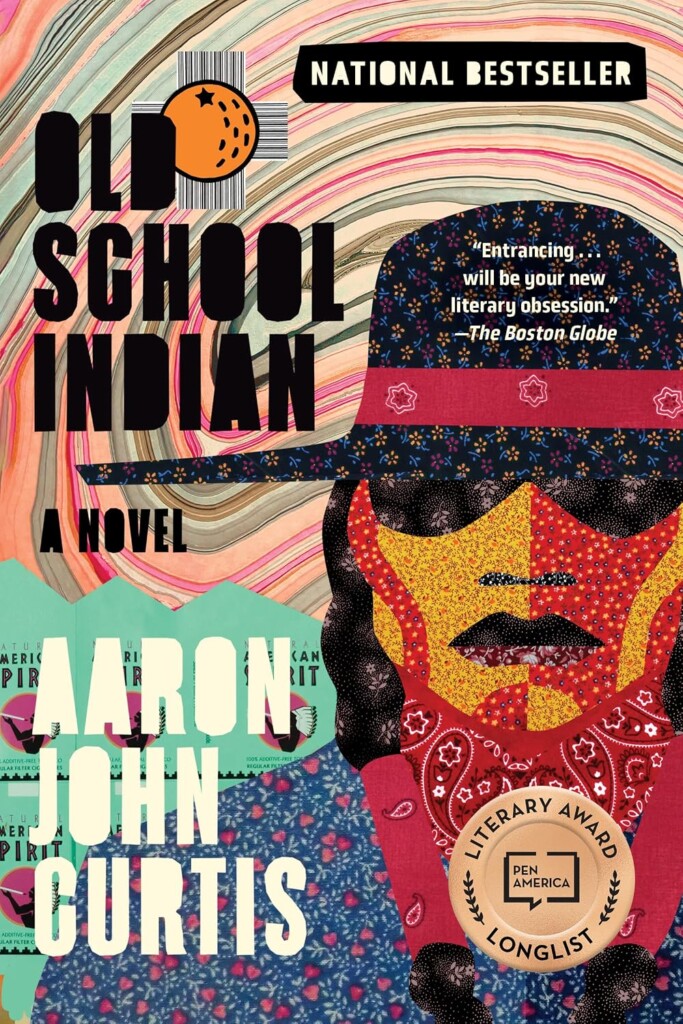
Old School Indian
Book Summary
Although he’s only 43, Abe’s doctor has told him he’s dying. After running out of options with traditional healthcare, he reluctantly returns home to the Ahkwesáhsne reservation where he was raised. He has a fragile hope for healing at the hands of his great-uncle Budge Billings, an unsentimental, recovered alcoholic with a unique gift.
On the reservation, Abe has to begin to find himself again, which includes confronting why he left at 18, along with the fears that have kept him away from home all these years.
HEADS UP: Graphic sex scenes and detailed descriptions of his physical lesions from his illness are included, so while some readers absolutely love the poetic writing, this one won’t be for everyone.
About the Author
Aaron John Curtis is an enrolled member of the Saint Regis Mohawk Tribe, which is the “white name”, as he puts it, for the American side of Akwesasne. His mother was born and raised there, and many of his family members still live on the reservation, though Curtis himself lives in Miami.
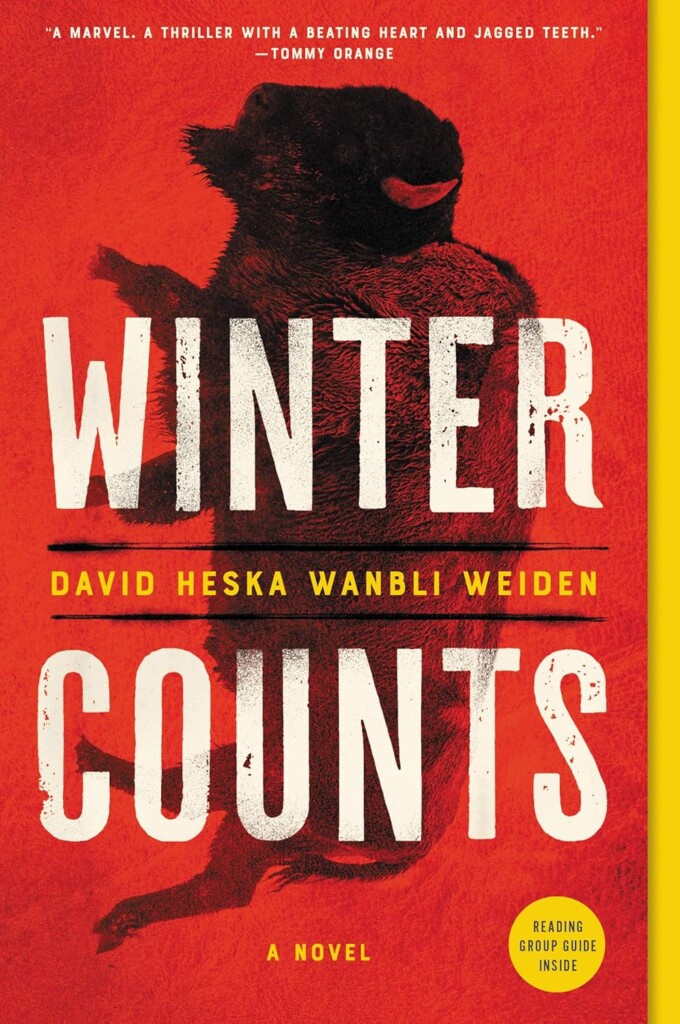
Winter Counts
Book Summary
On the Rosebud Indian Reservation in South Dakota, Virgil Wounded Horse is the local enforcer. He steps in if the American legal system or the tribal council fails to act.
When Virgil’s nephew is impacted by the heroin that has infiltrated the reservation, things get more personal. With the help of his ex-girlfriend, he’s determined to find and stop the flow of drugs. Along the way, he’s forced to reconcile the costs and challenges of being Native American in the twenty-first century.
About the Book & Author
Keep in mind that this book is a slow-burning, character-driven crime fiction rather than a fast-paced thriller.
David Heska Wanbli Weiden is an enrolled citizen of the Sicangu Lakota Nation and a professor of Native American and Indigenous Studies.
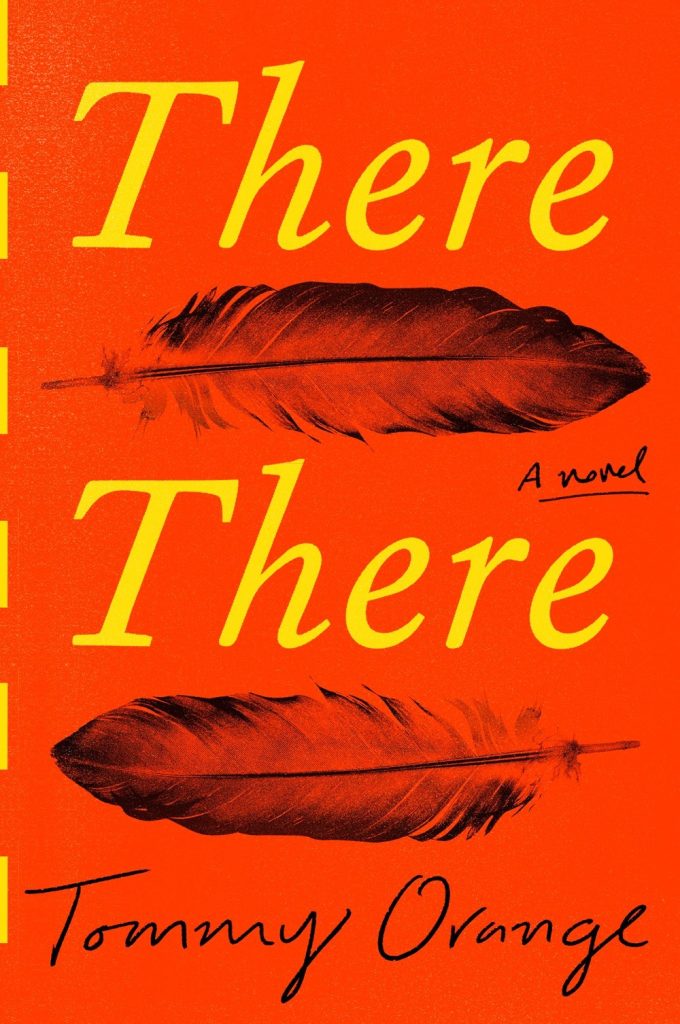
There There
Book Girls’ Readers Rate This Book
87% Would Recommend to a Friend
Book Summary
This present-day novel interweaves the lives of twelve urban Native American characters in Oakland, California, as they each make their way toward the Big Oakland Powwow. All have their own struggles, and through their stories, you’ll gain tremendous insight into the often difficult life of an urban Native American.
From a 14-year-old traveling to perform a traditional dance for the first time to a newly sober woman trying to reconnect with her family, each story eventually interconnects in unexpected ways.
About the Book & Author
This is not a light and easy-to-read novel, so be sure you’re in the right frame of mind when you pick it up. This book deals with some challenging and traumatic topics and events, but if it’s been on your list, this is the perfect time to pick it up. The follow-up, Wandering Stars, was released in 2024.
Tommy Orange is an enrolled member of the Cheyenne and Arapaho Tribes of Oklahoma, and was born and raised in Oakland, California. He is the son of a Native father who was a ceremony leader and a white mother, and has spoken about growing up feeling “both and neither.” His writing draws directly on that urban Native experience, including his work at a Native American Health Center.
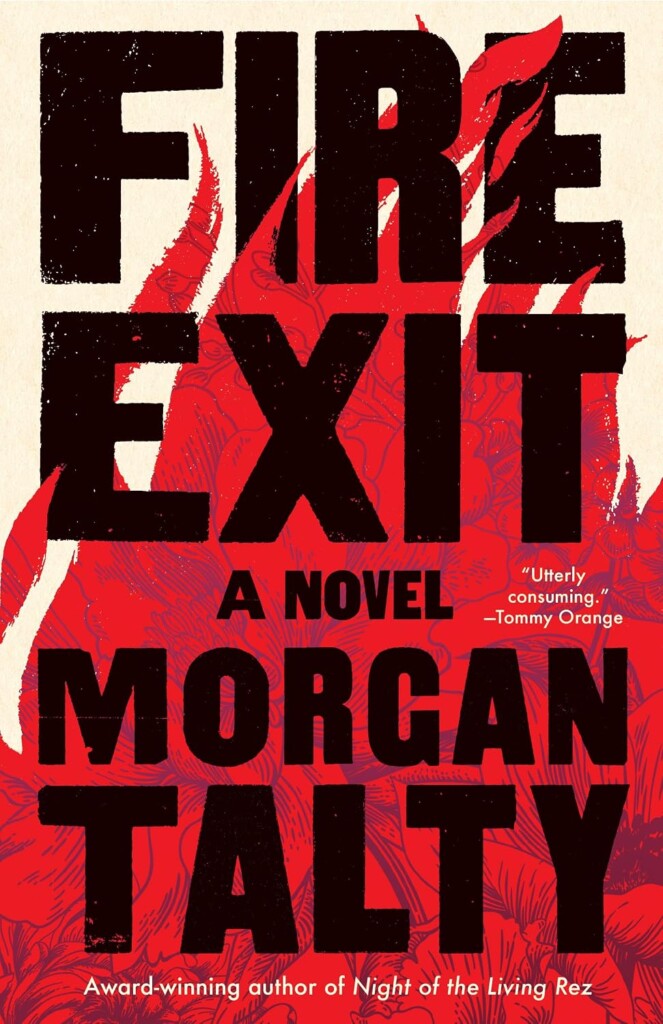
Fire Exit
Book Summary
For over 20 years, Charles has watched Elizabeth’s life unfold from across the river on Maine’s Penobscot Reservation. They are divided by not only the river and the tribal community, but by a secret. Elizabeth is his daughter, and he wishes he could tell her.
Now, it’s been weeks since he’s seen her, and he’s getting worried. While his days are filled with caring for his mother, who is slipping into dementia, and his bighearted, but quick-tempered and alcoholic best friend, Charles still finds himself preoccupied with the past. Would his daughter want to know the truth, even if it could cost her everything she’s ever known?
About the Author
Morgan Talty is a citizen of the Penobscot Nation and the author of the award-winning story collection Night of the Living Rez. Fire Exit is set on the edge of the Penobscot reservation and, in a notable turn, is narrated by a white man looking in — using that vantage to explore blood quantum, belonging, and who gets to claim a place in a Native community.
Non-Fiction Books & Memoirs
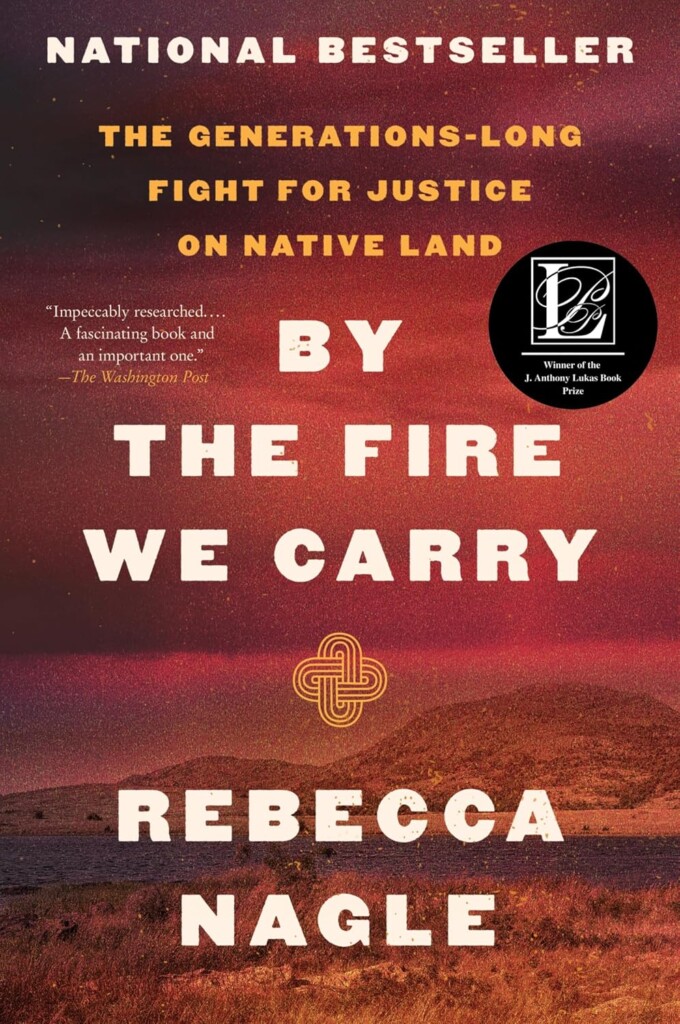
By the Fire We Carry: The Generations-Long Fight for Justice on Native Land
Book Summary
This narrative nonfiction braids together investigative journalism, personal memoir, and American history to tell the generations-long fight for justice on Native land. Its spine is the landmark 2020 Supreme Court case McGirt v. Oklahoma, which reaffirmed that much of eastern Oklahoma remains tribal reservation land, creating the largest restoration of tribal land in U.S. history.
Nagle traces how that case began, improbably, with a 1999 murder, and she sets the modern legal battle against centuries of broken promises, from the Trail of Tears forward. Drawing on her own Cherokee heritage and her family’s role in these struggles, she reveals how the treatment of Native nations is not a distant chapter of the past but is foundational to American law and democracy.
About the Author
Rebecca Nagle is an award-winning journalist and a citizen of the Cherokee Nation who lives in Tahlequah, Oklahoma. She is the writer and host of the Peabody-nominated podcast This Land, and she is known for her reporting on Native representation, federal Indian law, and tribal sovereignty.
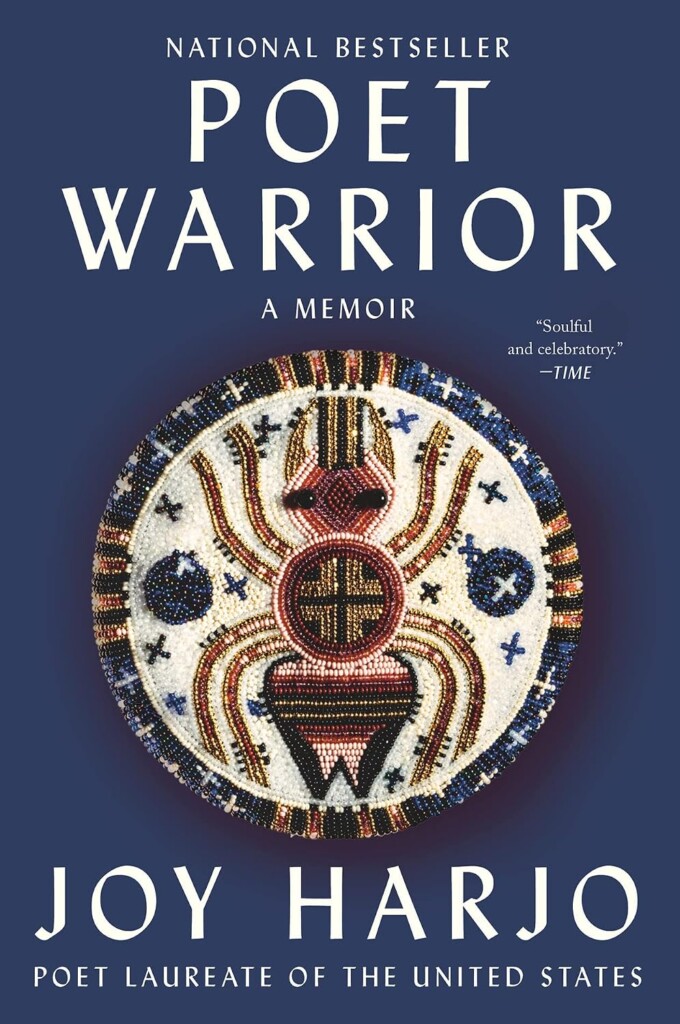
Book Summary
Poet Warrior is a memoir told partly in verse, in which Joy Harjo reflects on the life and the influences that shaped her into a poet. Moving between prose, poetry, and song, she pays homage to the ancestors, elders, and mentors who guided her, and revisits both the joys and the hardships of her early life.
Topics include her parents’ complicated marriage, an abusive stepfather, and the refuge she found in art and language. Expanding on the story she first told in her earlier memoir Crazy Brave, Harjo traces her path to becoming the first Native Nations U.S. Poet Laureate while meditating on grief, resilience, and the power of poetry to transform suffering.
About the Author
Joy Harjo is a citizen of the Muscogee (Creek) Nation and served as the 23rd U.S. Poet Laureate. She was the first Native American to hold the position, and only the second poet ever to serve three terms. Born in Tulsa, Oklahoma, she is an acclaimed poet, musician, playwright, and memoirist whose work draws on Native symbolism, history, and spirituality, often woven together with music. She lives on the Muscogee Nation Reservation in Oklahoma.
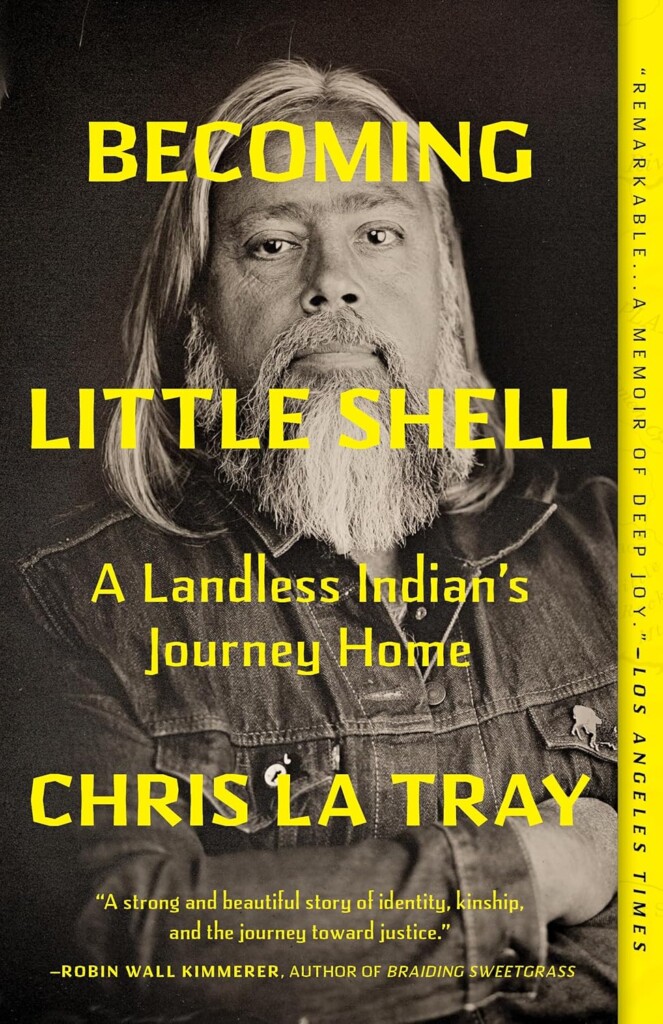
Becoming Little Shell: A Landless Indian’s Journey Home
Book Summary
Growing up in western Montana, Chris La Tray always felt drawn to his Indigenous heritage as his grandmother spoke of their Chippewa roots. However, his father fiercely denied any connection. Catalyzed by his father’s death and a moment at his grandfather’s funeral, when he found himself surrounded by relatives who were clearly Native yet strangers to him, La Tray sets out on a sprawling investigation into his family’s past.
Through DNA tests, archives, and conversations with authors, activists, elders, and historians, he pieces together not only his own lineage but the larger, complicated history of the Métis people and the Little Shell Tribe. This creates a story of border crossings, broken treaties, exile, forced assimilation, and the enduring wounds of colonialism. As he embraces his full identity, La Tray ultimately seeks enrollment with the Little Shell Tribe of Chippewa Indians, joining their generations-long fight for federal recognition.
About the Author
Chris La Tray is an Anishinaabe/Métis storyteller, a descendant of the Pembina Band of the Red River of the North, and a citizen of the Little Shell Tribe of Chippewa Indians. He grew up in Frenchtown, Montana, raised with a knowledge of his Chippewa background even as his father denied the family’s Native ancestry, and only came to understand his Métis and Little Shell heritage in his early forties — a common experience among Little Shell people.
Book Summary
The Heartbeat of Wounded Knee is a sweeping work of history, reportage, and memoir that reframes Native American life from the 1890 massacre at Wounded Knee to the present day.
Treuer wrote it as a direct counter-narrative to the idea, popularized by books like Bury My Heart at Wounded Knee, that Native history essentially ended with that massacre. Instead, growing up Ojibwe on a reservation and drawing on years of research, he tells the story of what came after: the depredations of each era, from forced assimilation at government boarding schools to land seizures and the “termination” policy, and the new modes of survival, self-rule, and resistance that Native peoples developed in response.
About the Author
David Treuer is Ojibwe from the Leech Lake Reservation in northern Minnesota, where he grew up and still keeps a home while teaching English at the University of Southern California. Trained as an anthropologist, he has spent his career researching and writing about Native life past and present across both fiction and nonfiction.
Book Summary
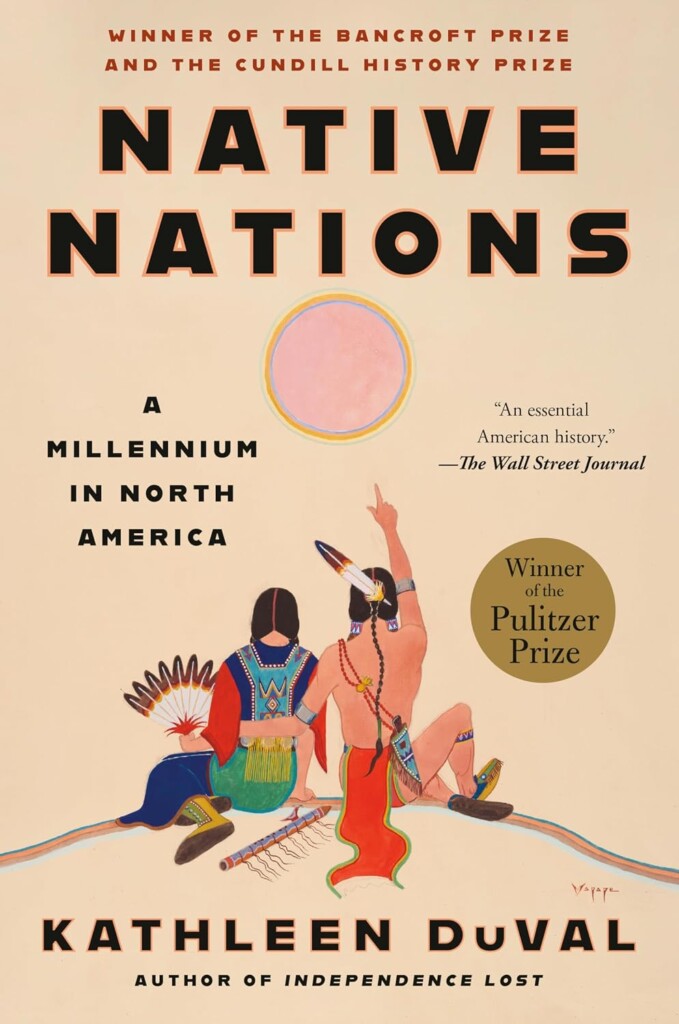
If you’re looking for a comprehensive, well-researched history book, this would be a great choice as it covers a thousand years of Indigenous history in North America, reframing the continent’s story with Native power and sovereignty at its center.
DuVal begins long before European colonization, when North American cities rivaled the great urban centers of the world, and traces how those civilizations gave rise to a diverse array of smaller nations with sophisticated systems of government, diplomacy, and trade.
When Europeans arrived in the sixteenth century, they encountered societies they underestimated and did not understand, and for centuries afterward Indigenous peoples often held the upper hand. Moving through figures and nations such as the Mohawks, Quapaws, Cherokees, Kiowas, and the Shawnee brothers Tecumseh and Tenskwatawa, the book carries that story of endurance and sovereignty all the way to present-day fights for self-determination.
About the Author
Kathleen DuVal is a Pulitzer Prize–winning historian and a professor of history at the University of North Carolina at Chapel Hill, where she teaches early American and American Indian history. She is not Native herself. Native Nations draws on decades of research in early American and Native American history and won the Pulitzer Prize, the Bancroft Prize, the Cundill History Prize, and the Mark Lynton History Prize.
Braiding Sweetgrass: Indigenous Wisdom, Scientific Knowledge, and the Teaching of Plants
Book Summary
This lyrical and insightful blend of memoir, science, and Indigenous wisdom explores the relationship between humans and the natural world. Robin Wall Kimmerer, a botanist and a member of the Citizen Potawatomi Nation, weaves together scientific knowledge and traditional ecological teachings to reveal the importance of living in harmony with the earth.
Through personal stories, reflections, and ecological observations, she invites readers to see the natural world not as a resource to be exploited, but as a community of beings to be honored and cared for.
About the Author
Robin Wall Kimmerer is a scientist and enrolled member of the Citizen Potawatomi Nation. She was trained as a botanist to ask questions of nature through science, and was raised in Potawatomi tradition to understand plants and animals as our oldest teachers.
Braiding Sweetgrass was awarded the 2014 Sigurd F. Olson Nature Writing Award. Seven years after its initial publication, this non-fiction title landed on the New York Times Best Seller list, where it stayed for more than 240 weeks.
If you’ve already read Braiding Sweetgrass, or if you are just looking for a shorter read, consider picking up Robin Wall Kimmerer’s 2024 published essay, The Serviceberry: Abundance and Reciprocity in the Natural World, in which she addresses how we can reorient our lives around gratitude, reciprocity, and community by learning from the natural world.
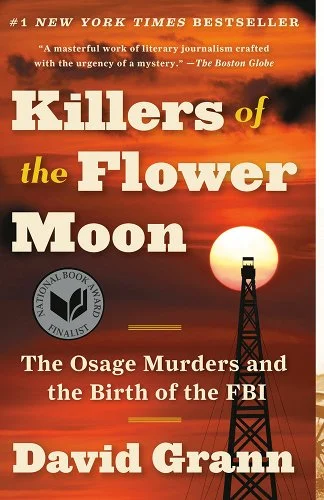
Killers of the Flower Moon
Book Girls’ Readers Rate This Book
96% Would Recommend to a Friend
Book Summary
Killers of the Flower Moon is a non-fiction tale featuring a plot that seems like it has to be fiction.
Finding oil within their land, the Osage Indian Nation became the richest people per capita in the world. The wealth attracted a whole host of bad characters, leading to murders and other vicious crimes.
This tale also represents the first time we really see J. Edgar Hoover show up in the history books, as a young FBI director leading the first major homicide investigation in the organization’s history.
One of our favorite actors-slash-narrators, Will Patton (Coach Yoast from the film Remember the Titans), does a fantastic job on this audiobook.
About the Author and Adaptation
David Grann is a bestselling author of narrative nonfiction, including The Lost City of Z, The Wager, and Killers of the Flower Moon. While he is not Native himself, he spent years working with archival records and, crucially, in conversation with members of the Osage Nation and descendants of the victims to reconstruct this history. Killers of the Flower Moon was a National Book Award finalist.
This book is a great companion to the 2023 Martin Scorsese film by the same name, which stars Leonardo DiCaprio, Al Pacino, and Lily Gladstone. Like Grann, Scorsese worked closely with the Osage Tribe and filmed in Oklahoma to authentically share this tragic piece of history.
In Honor of the Semiquincentennial
The United States is celebrating the 250th anniversary of the Declaration of Independence on July 4th, 1776. Join us in reading books about six pivotal moments in the country’s history.
Printable Version of this List
Our Inner Circle Members have access to a single page printable version of this book list, along with other fun perks. Join now for instant access to the printable!



Of the three books that I’ve read, I liked KILLER’S OF THE FLOWER MOON the best. Great Book/Great Movie.